The Practitioner Behind the Argument
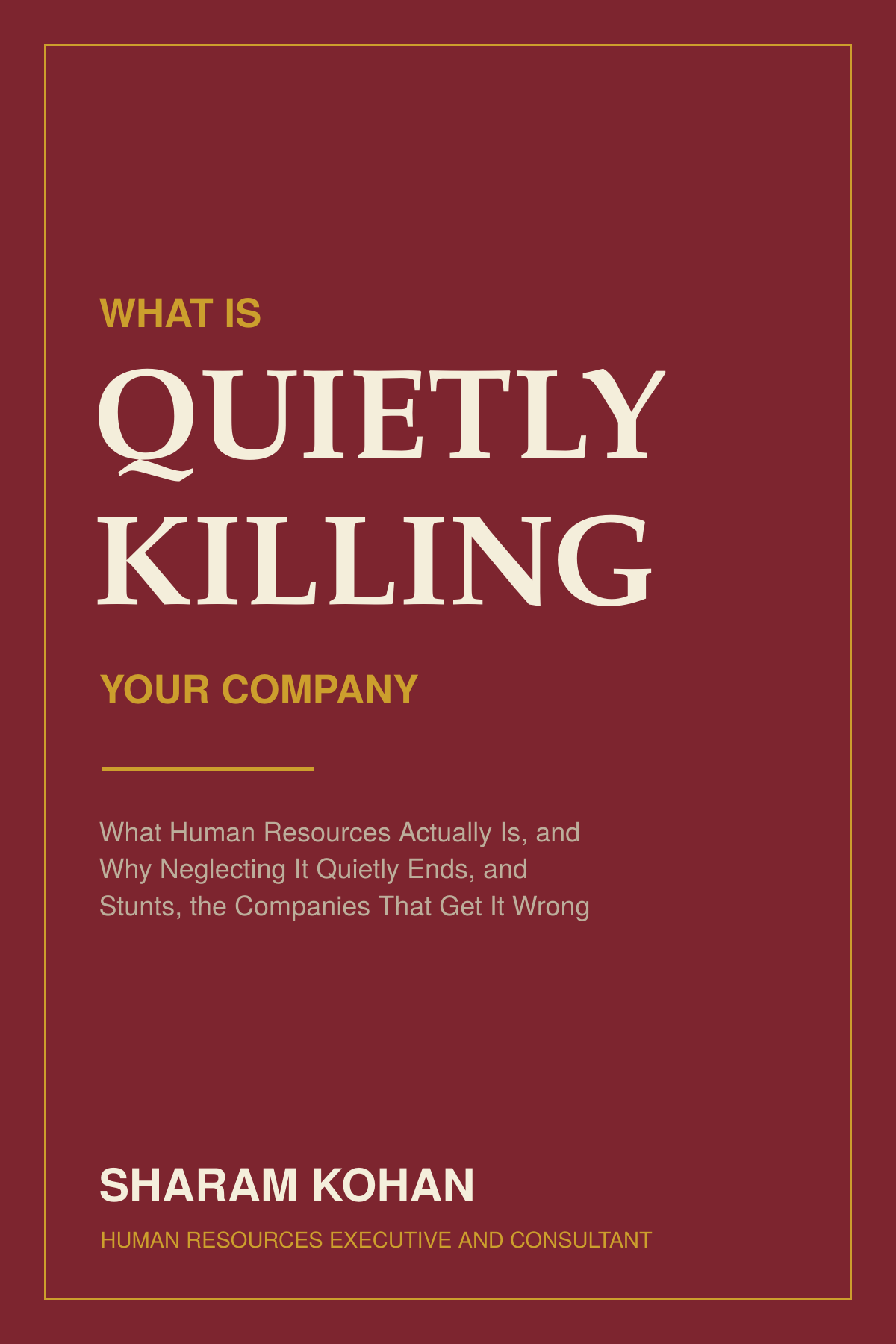
Sharam Kohan has spent more than twenty-five years inside the organizational machinery that What Is Quietly Killing Your Company describes, not as a theorist studying it at a remove, but as a senior manager and executive who has built people functions, led them through crisis, and observed, at close range, the quiet failures the book identifies and prices. His conclusions are not drawn from the literature alone. They are drawn from direct organizational experience, confirmed by the literature.
His career spans senior management and executive human resources roles across the healthcare, technology, energy, hospitality, retail, and nonprofit sectors. That breadth is itself part of the book's evidence: the same misdiagnosis of the people function, the same unrecorded costs, and the same barrier at the top recur across industries that otherwise have nothing in common. A pattern that survives every change of sector is not an industry problem. It is a structural one.
"The financial statements record the smoke long after the fire, and by the time the numbers move enough to demand attention, the damage that moved them has been compounding for years."
He is an alumnus of the University of California, Berkeley, School of Law, where he also earned an advanced certificate in business law, and he completed graduate legal study at Temple University Beasley School of Law with a focus on employment law and employment discrimination. That legal formation runs throughout the book's treatment of disputes, separation, and the costs of getting it wrong, where people problems harden into liability long before any statement records them. He also studied at Harvard University, where his work centered on leadership, institutional change, decentralized authority, and the management of people.
He is certified in human resources by SHRM. His work has centered on human resources strategy, organizational design, talent and succession planning, and the measurement discipline the book describes, and he has worked with leaders in business, healthcare, nonprofit, and organized labor.
He is also the author of The Honest Organization, an examination of the behavioral mechanisms by which organizations suppress the diagnostic information they most need, and of Sartre’s Conception of Freedom, which asks what a person is answerable for when the situation, rather than the will, holds most of the power. The first two form a pair: The Honest Organization explains why companies cannot see what is happening to them, and What Is Quietly Killing Your Company explains what they are failing to see, what it costs, and what the remedy requires. All three are indexed at sharamkohan.com.